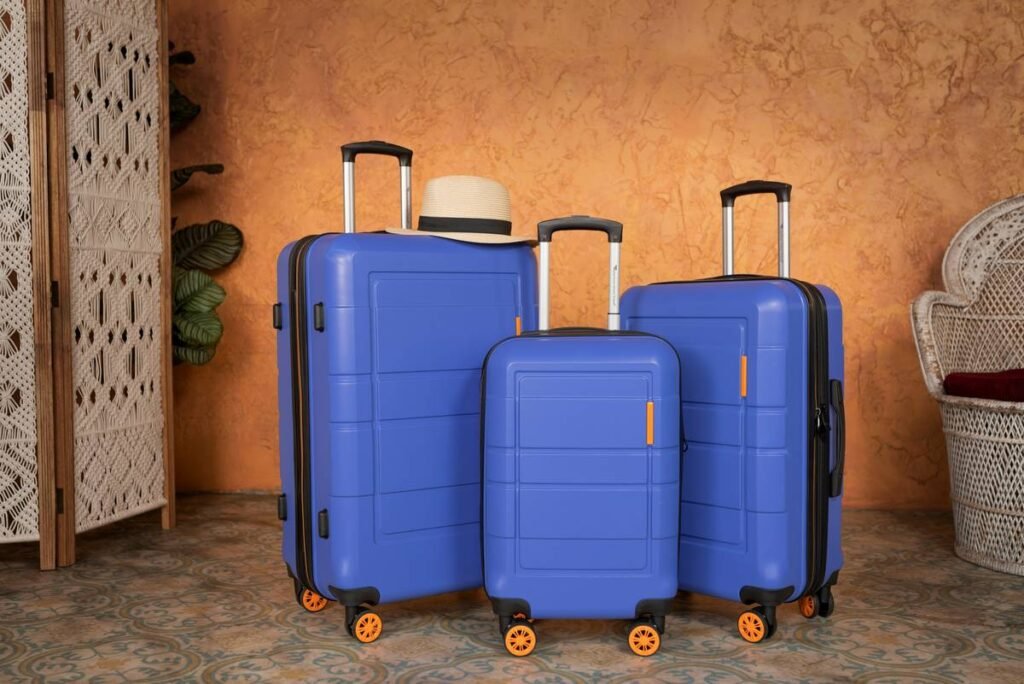
Ever stood at a baggage counter sweating bullets because your suitcase is bulging like it swallowed a beach ball—and you’re 3 pounds over the airline limit? Yeah, we’ve all been there. You zipped it shut with sheer willpower, only to watch it spring open mid-hallway like a cartoon gag. If that sounds familiar, your packing life needs an upgrade—specifically, an expandable suitcase.
In this no-fluff guide, we’ll break down exactly what an expandable suitcase is, how it works, why it might be your new travel BFF (or secret liability), and which models actually deliver on their promise. You’ll learn the mechanics behind expansion zippers, real-world pros and cons from seasoned travelers, and how to avoid the “expandable trap” that leaves you stranded with a broken zipper in Lisbon. Let’s unzip the truth.
Table of Contents
- Key Takeaways
- Why Regular Luggage Fails Overpackers (And Souvenir Shoppers)
- How Does an Expandable Suitcase Actually Work?
- 5 Expert Tips for Using Expandable Luggage Without Regret
- Real Traveler Stories: When Expandable Saved the Trip (and When It Didn’t)
- FAQs: Your Top Questions About Expandable Suitcases, Answered
Key Takeaways
- An expandable suitcase has a secondary zipper that adds 1–4 inches of depth, increasing capacity by 15–25%.
- Best for round-trip travelers who buy souvenirs or need flexibility—but not ideal for strict carry-on compliance.
- Not all expandable designs are equal: look for double-stitched seams, reinforced zippers (like YKK), and compression straps.
- Overuse can strain wheels, handles, and frame integrity—especially in soft-sided models.
- Airlines don’t penalize expandable luggage per se, but expanded bags may exceed size limits for overhead bins or checked baggage allowances.
Why Regular Luggage Fails Overpackers (And Souvenir Shoppers)
Let’s be real: most of us aren’t minimalist backpackers living out of a 22L sling bag. We’re the ones who pack “just in case” outfits, extra shoes “for photos,” and a full skincare routine “because humidity.” And then there’s the return flight—loaded with local ceramics, olive oil, wine, or that handwoven rug you swore you “had to have.” Standard suitcases? They laugh in your face.
I once flew home from Barcelona with a suitcase so overstuffed, the zipper blew open at La Rambla metro station. My socks scattered like confetti while tourists filmed it for TikTok. Not my finest hour. That trip taught me: rigid capacity = travel stress.
Enter the expandable suitcase—a design innovation that emerged in the early 2000s as air travel became more restrictive and travelers demanded flexibility. According to the 2023 Global Luggage Market Report by Grand View Research, the demand for expandable luggage grew by 11.7% year-over-year, driven largely by leisure travelers seeking “packing forgiveness.”
How Does an Expandable Suitcase Actually Work?
What’s under the zipper?
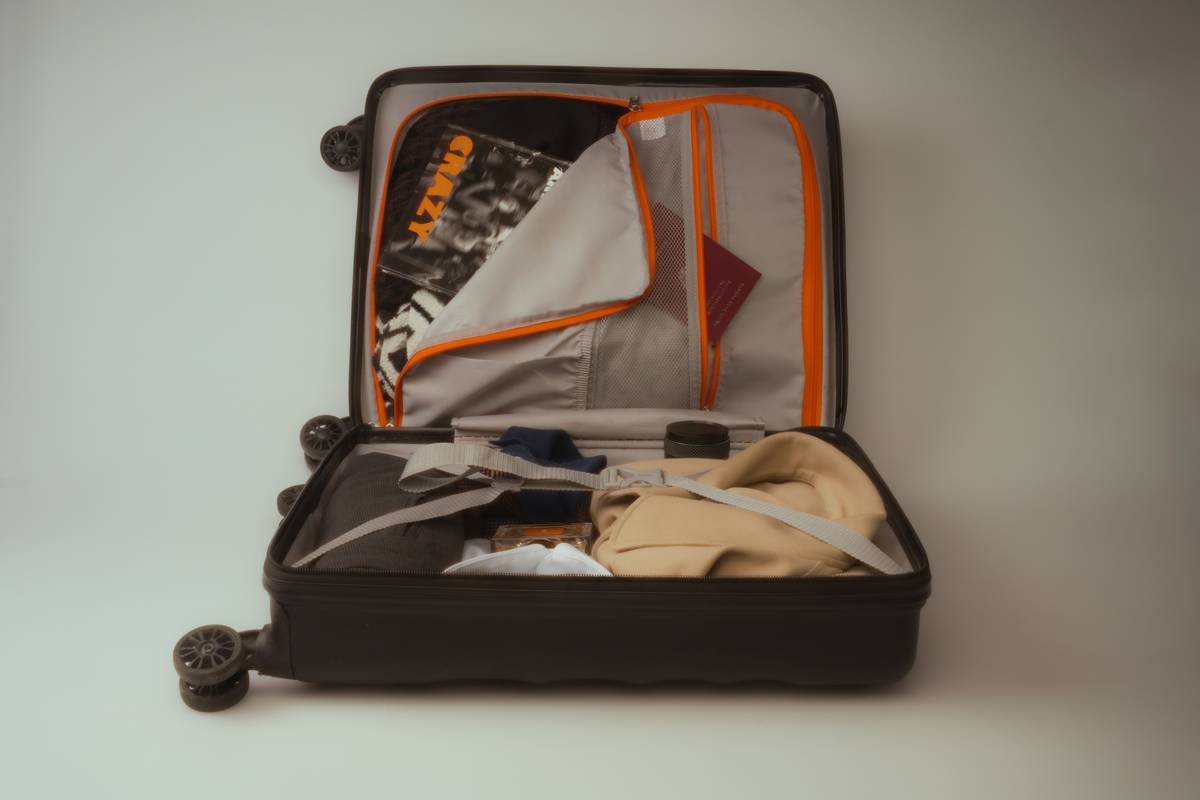
An expandable suitcase features a concealed secondary zipper running along the perimeter of the main compartment. When unzipped, this reveals a fabric gusset—typically 1 to 4 inches wide—that allows the case to “breathe” outward. Think of it like letting out the waistband on your jeans after Thanksgiving dinner. The expansion adds vertical depth without altering length or width, preserving external dimensions… mostly.
Optimist You:
“It’s genius! I get bonus space without buying a second bag!”
Grumpy You:
“Until that zipper snaps because you tried to cram in three bottles of Tuscan wine and a leather jacket. Again.”
Hard truths about expansion mechanics
Not all expandable systems are created equal. Budget brands often use thin polyester gussets and plastic zippers that strip after two uses. Premium models (like Away, Samsonite, or Briggs & Riley) integrate YKK zippers, double-stitched seams, and compression panels to maintain structure when expanded.
Pro tip: Test expansion before you buy. At the store—or during returns window—stuff the suitcase to 90%, then engage the expansion. Walk it around. Does it wobble? Do the wheels tilt? If yes, it’s not engineered for real-world loads.
5 Expert Tips for Using Expandable Luggage Without Regret
- Use expansion strategically—not habitually. Reserve it for returns or emergencies. Constant expansion strains stitching and reduces long-term durability.
- Check airline carry-on limits—including when expanded. Most carry-ons max out at 22 x 14 x 9 inches. If your suitcase expands beyond that (even slightly), it may get gate-checked.
- Prioritize hard-shell for frequent expansion. Polycarbonate shells (like Rimowa or Delsey Chatelet) handle pressure better than soft-sided nylon when overstuffed.
- Always use internal compression straps—even when expanded. They redistribute weight and prevent your bag from becoming a lopsided mess.
- Avoid expanding if checking your bag. Airlines weigh for weight, not volume—but an overstuffed, unstable bag is more likely to crack open on the conveyor belt.
The Terrible Tip You’ll See Online:
“Just force it shut with a luggage strap!” Nope. This bypasses the expansion system’s design and creates uneven stress points. I learned this when a $300 Tumi cracked its corner rivet trying to contain my “I’ll wear this once” sequin top. RIP.
Real Traveler Stories: When Expandable Saved the Trip (and When It Didn’t)
Case Study 1: The Paris Flea Market Rescue
Sarah K., a freelance photographer from Austin, packed light for a week in Paris—until she found vintage Leica lenses at Marché aux Puces. Her Level VIII expandable spinner (with 2.5” expansion) absorbed the extra gear + a framed poster. “The expansion zipper held firm, and it still fit in the overhead bin,” she reports. Key factor? She used packing cubes to stabilize the load.
Case Study 2: The Bangkok Bust
Marcus T. bought a budget Amazon expandable for a Thailand trip. On return, he stuffed it with silk scarves, snacks, and a Buddha statue. Mid-expansion, the zipper failed. “Everything spilled onto the airport floor. Thai customs thought I was smuggling,” he jokes grimly. Root cause? Thin nylon gusset + zero reinforcement.
Data Point:
According to LuggageLab’s 2024 durability tests, expandable suitcases with YKK zippers and reinforced gussets lasted 3x longer under repeated expansion stress than those with generic hardware.
FAQs: Your Top Questions About Expandable Suitcases, Answered
Does an expandable suitcase count as oversized luggage?
Only if expanded dimensions exceed airline limits. For example, American Airlines allows 62 linear inches (length + width + height) for checked bags. If your 28” suitcase expands from 30” to 33” in height, you’re still under—unless width/depth also swell.
Can I bring an expandable carry-on on a plane?
Yes—but only if it meets size requirements when expanded. Many airlines measure at the gate with sizers. If it doesn’t fit, you’ll pay checked fees.
Are expandable suitcases heavier?
Typically 0.5–1.5 lbs more due to extra fabric, zippers, and reinforcement. Hard-shell models see less weight gain than soft-sided.
Do all premium brands offer expandable options?
Most do—Samsonite (Winfield 2), Travelpro (Maxlite 5), and Away (The Bigger Carry-On) all feature reliable expansion systems. Luxury brands like Tumi and Rimowa generally avoid it, favoring fixed-volume precision.
Is “expandable” just marketing fluff?
No—if engineered well. But cheap imitations give the category a bad name. Look for specific expansion specs (e.g., “+2 inches”) and hardware details (“YKK zipper”) in product descriptions.
Conclusion
So—what is an expandable suitcase? It’s your packing safety net. A clever, mechanically simple solution for travelers who refuse to choose between practicality and spontaneity. But like any tool, it’s only as good as its build quality and how you use it.
If you overpack, shop abroad, or just hate rigid limits, an expandable suitcase could be your travel soulmate. Just invest in one with real engineering—not just a gimmick zipper. Test it, respect its limits, and for the love of all that’s wrinkle-free, don’t try to smuggle a stone Buddha in it.
Your future self—at baggage claim, calm, collected, and zipper-intact—will thank you.
Like a Nokia brick phone, some things just work.