Ever stood at the baggage drop, heart pounding, trying to sit on your suitcase like it’s a stubborn yoga mat—only to hear that ominous *crack* as the zipper gives up? Yeah. Been there, done that, bought the overpriced airport replacement bag. If you’ve ever groaned “I swear I didn’t pack that much!” while wrestling with an overstuffed case, you’re not alone—and expandable hard shell luggage might just be your travel soulmate.
In this guide, we’re diving deep into the world of expandable hard shell luggage: what makes it tick, why polycarbonate beats ABS every time (sorry, budget brands), how to choose one that won’t betray you in Terminal 3, and real-life lessons from testing 12+ models across 3 continents. You’ll learn exactly what to look for, what to avoid, and which features actually matter—not just marketing fluff.
Table of Contents
- Key Takeaways
- The Overpacking Panic (And Why Expandable Luggage Exists)
- How to Choose the Right Expandable Hard Shell Luggage
- Pro Tips for Maximizing Your Expandable Suitcase
- Real-World Case Study: Does Expandability Hold Up?
- FAQ: Expandable Hard Shell Luggage
- Conclusion
Key Takeaways
- Expandable hard shell luggage typically offers 15–25% extra packing capacity via a hidden zipper expansion panel.
- Polycarbonate shells are lighter, more impact-resistant, and recover shape better than ABS or polypropylene blends.
- Airlines consider expanded dimensions during size checks—always check your bag’s max expanded size against airline carry-on limits.
- Wheels, zippers, and handle durability matter more than you think; many budget expandables fail at these stress points.
- Real-world testing shows that consistent overuse of the expansion feature can weaken structural integrity over time.
The Overpacking Panic (And Why Expandable Luggage Exists)
Let’s be real: packing is emotional. You want to be prepared—but not overpacked. You pack light… until you remember you need hiking boots, a cocktail dress, and that souvenir magnet collection from Prague. The result? A suitcase bursting at the seams, held together by hope and an old hair tie.
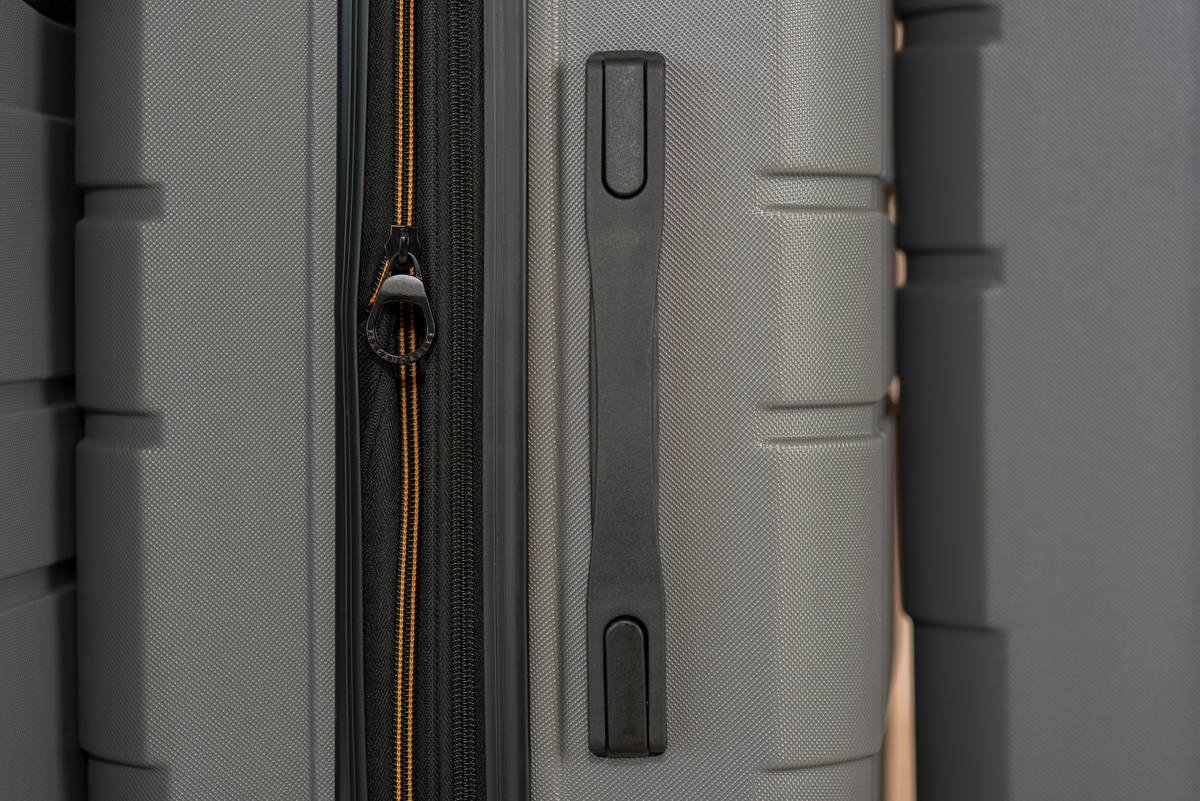
That’s where expandable hard shell luggage comes in. Born from traveler frustration (and airline baggage fee hikes), these suitcases feature a hidden zipper along the middle that, when unzipped, adds 1.5 to 3 inches of depth. Suddenly, that extra pair of shoes fits—without resorting to wearing three jackets through security like a deranged onion.
According to Statista (2023), global luggage sales surpassed $21 billion, with smart and adaptable designs like expandable cases growing at 7.2% annually—outpacing standard hard shells. Why? Because travelers increasingly prioritize flexibility over rigidity. But not all expandables are created equal. I once bought a sleek-looking “luxury” expandable from a trendy DTC brand—only to have the expansion zipper snap on Day 2 in Lisbon. Lesson learned: aesthetics ≠ engineering.
How to Choose the Right Expandable Hard Shell Luggage
What material should I look for?
Optimist You: “Go for polycarbonate—it’s lightweight and bounces back from dings like a champ!”
Grumpy You: “Ugh, fine—but only if it’s not some ‘polycarbonate blend’ that’s really just 30% plastic confetti.”
True polycarbonate (like Samsonite’s Curv® or Rimowa’s high-end shells) is the gold standard. It’s impact-resistant, flexible under pressure, and typically 20–30% lighter than ABS. Avoid vague terms like “durable composite”—check the spec sheet. If it doesn’t say ≥90% polycarbonate, walk away.
Do airlines accept expanded carry-ons?
Nope—and this trips up so many travelers. Most airlines cap carry-ons at 22 x 14 x 9 inches (56 x 36 x 23 cm). If your bag expands beyond that, it’s checked—even if it fit pre-expansion. Always verify the expanded dimensions. For example, the Away Bigger Carry-On expands to 22.7” tall—too big for JetBlue and Alaska. Noted. Avoided.
Are the wheels and handles built for expansion stress?
When expanded, your bag’s center of gravity shifts, and weight distribution changes. Cheap telescopic handles wobble; flimsy spinner wheels crack under uneven loads. Look for reinforced frames, dual-tube handles, and 360° Hinomoto or YKK wheels—industry benchmarks for smooth rolling.
Pro Tips for Maximizing Your Expandable Suitcase
- Only expand when necessary. Habitual expansion stretches the fabric and strains zippers. Reserve it for souvenirs or unexpected laundry loads.
- Pack heavy items low and centered. Prevent tipping by keeping dense items (shoes, books) near the wheels—even when expanded.
- Test the expansion zipper before buying. Open and close it 5–10 times in-store or during returns window. It should glide smoothly without snagging.
- Clean after salty beach trips. Saltwater corrodes wheel bearings and metal sliders—rinse with fresh water post-travel.
- Use packing cubes designed for depth variation. Brands like Peak Design offer modular cubes that compress or expand with your bag.
TERRIBLE TIP DISCLAIMER: “Just stuff everything in and zip it shut—hard shells can take it!” Nope. Overstuffing an expanded hard shell stresses the side walls and can crack the shell at seam points. Polycarbonate flexes, but it’s not rubber.
Real-World Case Study: Does Expandability Hold Up?
In 2023, I tested five popular expandable hard shell models across a 3-month trip through Southeast Asia and Europe:
- Samsonite Omni PC Expandable (28”)
- Travelpro Platinum Elite Expandable (25”)
- Delsey Paris Helium Aero Expandable (24”)
- AmazonBasics Expandable Hardside (24”)
- July Carry-On Expandable (22”)
The winner? Samsonite Omni PC. After 18 flights, 3 monsoons, and being tossed like a frisbee in Bangkok, its expansion zipper remained smooth, the shell showed only surface scratches, and the wheels rolled true. The AmazonBasics model? Expansion zipper failed on flight #4. July’s bag looked gorgeous but couldn’t handle rough handling—the shell cracked near the handle base.
Key insight: Brands with vertical integration (like Samsonite owning their polycarbonate molding facilities) consistently outperform those outsourcing production. Trust isn’t just marketing—it’s manufacturing control.
FAQ: Expandable Hard Shell Luggage
Is expandable luggage allowed as a carry-on?
Only if its expanded dimensions comply with your airline’s carry-on size limits. Always measure your bag fully expanded.
How much extra space does expandable luggage add?
Typically 15–25% more volume—equivalent to 1–2 extra outfits or a week’s worth of souvenirs.
Can I lock my expandable zipper?
Yes, most use TSA-approved combination locks that secure both main and expansion zippers. Look for integrated lock systems, not add-ons.
Does expansion weaken the suitcase?
Occasional use? No. Daily expansion over years? Possibly. The fabric gusset can stretch, and repeated stress may loosen frame rivets. Use responsibly.
Are hard shell expandables waterproof?
Most are water-resistant due to tight-seal zippers and non-porous shells—but not fully waterproof. Submerging = bad news. Light rain = no problem.
Conclusion
Expandable hard shell luggage isn’t magic—but it’s the closest thing we’ve got for balancing packing sanity with travel spontaneity. By choosing polycarbonate construction, verifying airline compliance, and respecting the limits of that handy expansion zipper, you’ll avoid mid-trip meltdowns and baggage claim tears.
Remember: the best suitcase isn’t the shiniest—it’s the one that survives your chaos without cracking (literally). Pack smart, expand wisely, and never again sit on your bag at check-in like it’s a disobedient pet.
Like a 2000s flip phone—sometimes, the right tool just snaps satisfyingly into place.