Ever zipped up your suitcase only to realize you’ve got 37 minutes before your Uber arrives—and your jacket, two pairs of shoes, and that giant bottle of CBD gummies still won’t fit? Yeah. We’ve all been there. But what if your luggage could literally grow when you needed it to?
If you’re wondering, “space saver expandable can you use without regretting it later?”—you’re not alone. Expandable suitcases promise extra room at the flick of a zipper, but they’re often misunderstood. In this post, we’ll cut through the marketing fluff and give you real-world insights from years of dragging (and overpacking) these clever cases across 30+ countries.
You’ll learn:
- When expandable luggage saves your trip—and when it backfires
- How airlines actually treat expanded bags at check-in (spoiler: not always kindly)
- Pro packing strategies that turn your expandable into a true space-saver
- Which brands deliver real durability vs. cheap gimmicks
Table of Contents
- The Expandable Luggage Dilemma: Miracle or Marketing Hype?
- How to Use Expandable Luggage Without Pain (or Extra Fees)
- Best Practices for Maximizing Space—Without Looking Like a Tourist Trap
- Real-World Case Studies: When Expandable Saved (or Doomed) a Trip
- FAQs: Your Burning Questions Answered
Key Takeaways
- Expandable luggage adds 15–25% more volume—but may push you over airline size/weight limits.
- You can use expandable bags wisely—if you pack strategically and know airline policies.
- Hard-shell expandables offer better structure; soft-shell ones flex more but sag when overstuffed.
- Always measure your bag in its expanded state before flying budget carriers like Ryanair or Spirit.
- The best “space saver” trick? Pack light first—then expand only for souvenirs or emergencies.
The Expandable Luggage Dilemma: Miracle or Marketing Hype?
Let’s be real: expandable luggage sounds like a travel fairy godmother. One minute you’re at 90% capacity, the next—you’ve got room for that handwoven rug from Marrakech. But here’s the catch most brands won’t tell you: expandability comes with trade-offs.
I learned this the hard way in Lisbon. My sleek, polycarbonate expandable spinner looked perfect for a 5-day city break. I packed light—until I found a vintage leather jacket I just *had* to buy. Expanded the bag. Zipped it. Felt victorious. Then… the airport scale beeped red: 52 lbs. My airline limit? 50. I paid €65 for 2 extra pounds while sweating under fluorescent lights, my jacket suddenly feeling less “vintage treasure,” more “financial anchor.”
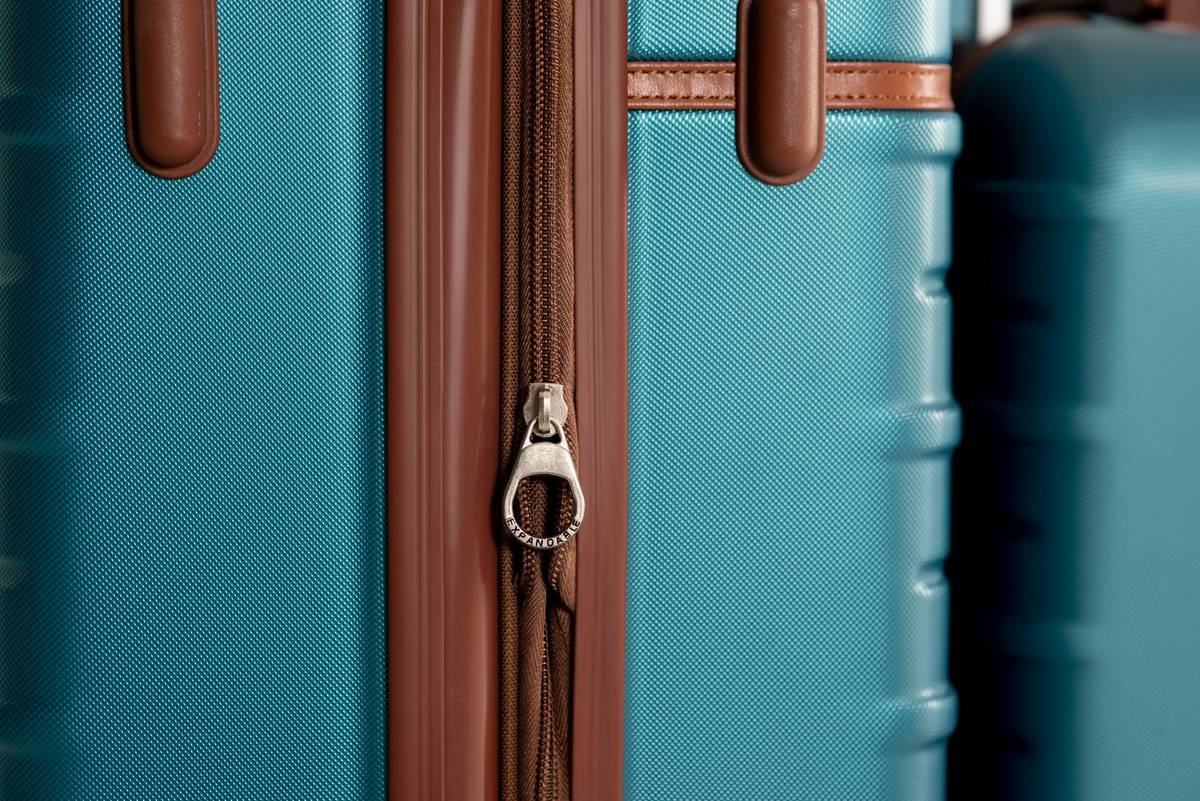
According to the International Air Transport Association (IATA), the global average checked baggage weight allowance is 23 kg (50.7 lbs)—but budget airlines often drop this to 20 kg (44 lbs). Meanwhile, expandable zippers typically add 2–4 inches in depth, translating to roughly 8–12 liters of extra space. That’s enough for 3 sweaters… or one pair of boots… or a panic-buy cheese wheel (don’t ask).
How to Use Expandable Luggage Without Pain (or Extra Fees)
Yes, you can use space saver expandable luggage smartly—if you treat expansion like an emergency lever, not a default setting.
Should you pack expanded from the start?
Optimist You: “More space = stress-free packing!”
Grumpy You: “Ugh, fine—but only if coffee’s involved… and you swear not to overstuff it like last time.”
Verdict: Don’t. Start unexpanded. Use compression cubes to minimize bulk. Only unzip the expansion compartment when returning home with souvenirs—or during unexpected layovers requiring extra layers.
How do airlines view expanded bags?
Most full-service carriers (Delta, Lufthansa, Emirates) don’t re-measure checked bags unless they look obviously oversized. But ultra-low-cost carriers? They live by tape measures. Ryanair’s sizer boxes are infamously strict—and their policy explicitly states: “Maximum dimensions include any expandable sections.” So if your “carry-on” grows beyond 55 x 40 x 20 cm when expanded? Gate agents will charge you €/£/$60+ to check it.
What’s the smartest way to test expandability pre-trip?
- Pack your bag normally.
- Weigh it.
- Expand it and add your “might-buy” items (e.g., shoes, fabrics, local snacks).
- Weigh again. If you’re within 2–3 lbs of your limit—don’t expand on outbound flights.
Best Practices for Maximizing Space—Without Looking Like a Tourist Trap
Expandable ≠ chaotic. Here’s how to make it work like a pro:
- Pack heavy items low and centered. Expanding shifts your center of gravity—overstuffing the top causes wheel wobble.
- Use the expansion zone for soft items only. Jackets, scarves, or rolled towels—not rigid souvenirs that stress seams.
- Choose dual-zipper expansion. Single zipper designs can tear under pressure; dual zippers distribute tension (Samsonite and Travelpro excel here).
- Avoid expanding soft-shell bags vertically. They bulge sideways and snag on carousel belts. Hard shells maintain shape better.
- Never expand for carry-ons on tight connections. Overstuffed bags jam overhead bins and get gate-checked—defeating the purpose.
And please—for the love of TSA agents—don’t try to “sneak” an expanded bag as a carry-on if it clearly exceeds size limits. We’ve seen travelers argue for 20 minutes while holding up entire boarding lines. Not cute.
Real-World Case Studies: When Expandable Saved (or Doomed) a Trip
Case 1: The Tokyo Souvenir Savior
A freelance photographer used a Briggs & Riley Baseline Expandable Carry-On (which includes a lifetime “Simple as That” warranty) on a 7-day Japan trip. She kept it unexpanded going in. On return, she added three yukata robes, matcha kits, and ceramic chopsticks—all nestled in the expansion zone. Total weight: 18.2 lbs. Cleared ANA’s 22-lb carry-on limit with ease. “Felt like a packing ninja,” she told us.
Case 2: The Barcelona Bag Disaster
A traveler bought a $65 Amazon Basics expandable hardside spinner for a weekend Eurotrip. Loved the “extra room!”—so much so, he stuffed it full both ways. On return, the expansion zipper split mid-airport. Clothes spilled onto the terminal floor. No warranty coverage. Cost to replace mid-trip: €120 + emotional damage.
Moral? Invest in reputable brands with robust zippers and reinforced corners. Look for YKK zippers—they’re the gold standard for durability (used by Away, Tumi, and Osprey).
FAQs: Your Burning Questions Answered
Can you use space saver expandable luggage as a carry-on?
Only if its expanded dimensions meet the airline’s carry-on limits. Most U.S. carriers allow up to 22 x 14 x 9 inches (including handles/wheels). Measure your bag fully expanded!
Does expandable luggage weigh more?
Yes—typically 0.5 to 1.5 lbs heavier than non-expandable equivalents due to extra fabric, zippers, and reinforcement. Check product specs; lightweight models (under 8 lbs empty) exist from brands like Paravel and Monos.
Are expandable suitcases less durable?
Not necessarily—if well-made. But poorly constructed ones fail at stress points (zipper junctions, corners). Stick with brands offering warranties covering expansion mechanisms.
“Space saver expandable can you use” on international flights?
Absolutely—but research your airline’s baggage policy first. EU-based carriers tend to be stricter on size than U.S. legacy airlines. When in doubt, fly unexpanded outbound, expand only on return.
Conclusion
So—can you use space saver expandable luggage wisely? Absolutely. But it’s not a free pass to pack recklessly. Treat expansion like a strategic reserve, not your default mode. Know your airline’s rules, invest in quality construction, and always prioritize weight over volume.
Used right, expandable luggage turns stressful packing dilemmas into seamless solutions. Used wrong? You’ll be the person paying €70 to ship a bag of socks home. Don’t be that person.
Like a Tamagotchi, your suitcase needs thoughtful care—not just digital attention. Feed it wisely.
Haiku for the overpacker:
Zipper stretched too wide,
Souvenirs whisper goodbye—
Fee counter looms near.